
The federal limit is 2,300 milligrams of sodium per day, per the Dietary Guidelines for Americans 2020-2025, while the American Heart Association's 2021 scientific statement sets 1,500 milligrams as the ideal daily target for most adults, especially those with high blood pressure. The gap most people must close is larger than either number: average American intake runs about 3,400 milligrams daily, per CDC analyses, and roughly 70 percent of it arrives in packaged and restaurant food, per CDC's where-sodium-comes-from analyses.
These limits are attributed government and professional-society figures, not recommendations; people with hypertension, heart failure, or kidney disease need sodium targets set by their own clinician, and some heart-failure patients are restricted below every figure cited here.
Why do two official numbers exist?
The 2,300 milligram figure is the federal Chronic Disease Risk Reduction intake, set by the National Academies in its 2019 dietary reference intake update as the level above which cardiovascular-disease risk rises in a population sense. The heart association's 1,500 milligrams reflects its reading of the dose-response evidence — blood pressure falls further as sodium drops below 2,300, per its 2021 statement in the journal Hypertension — applied as a target for most adults, with the exception of workers, endurance athletes, and others with heavy sweat losses, for whom the association notes higher needs. Both bodies agree on direction; they differ on where the ceiling should sit.
How far above the limits is the average diet?
Roughly 50 percent above the federal cap. CDC analyses of National Health and Nutrition Examination Survey data put average intake near 3,400 milligrams daily, with about 90 percent of Americans exceeding the 2,300 limit and more than 95 percent of men, per CDC summaries. Children's intake averages similarly elevated relative to age-adjusted limits. The excess has proven stubborn: intakes have barely moved across two decades of survey cycles, which is why the Food and Drug Administration turned to targets for the food supply rather than individual advice alone — issuing voluntary sodium reduction targets for processed and restaurant foods in 2021, with a second phase proposed in 2024.
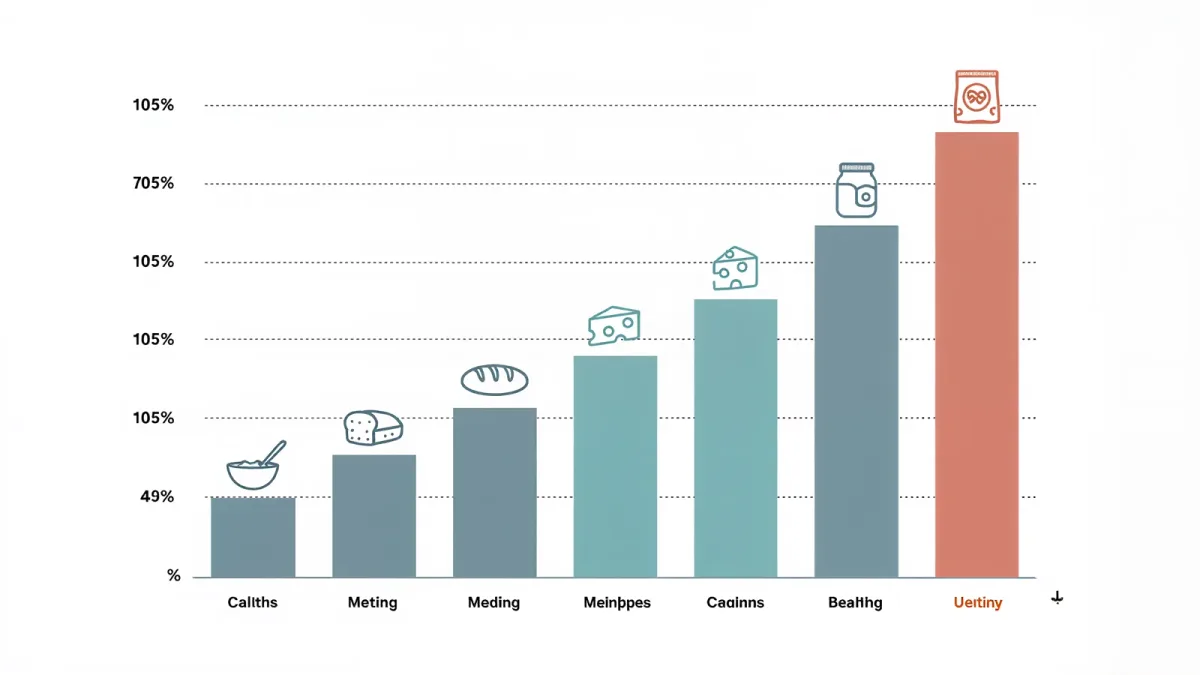
Top sodium sources in CDC's ranking
| Food category | Share of US sodium intake | Typical contribution |
|---|---|---|
| Breads, rolls, and baked goods | Highest-volume single category | Modest per serving, eaten often |
| Pizza | Among top five | Crust, sauce, cheese, cured toppings stacked |
| Sandwiches, burgers, tacos | Among top five | Bread plus processed meat plus condiments |
| Cold cuts and cured meats | Among top five | Curing salt built in before cooking |
| Soups, savory snacks, poultry dishes | Among top ten | Broth bases and seasoning mixes |
The ranking, from CDC's analysis of what Americans eat, carries the counterintuitive core of sodium policy: the categories are not the saltiest foods, they are the most eaten ones. Bread is not salty like a pickle — a slice carries 100 to 200 milligrams — but three slices a day make it a leading source. Salt added in home cooking and at the table, by contrast, contributes a minority of intake, roughly 11 percent in CDC's accounting from the same surveys.
The shaker is not the problem. Roughly 70 percent of the sodium arrives already in the package or on the plate.
What did the label change make visible?
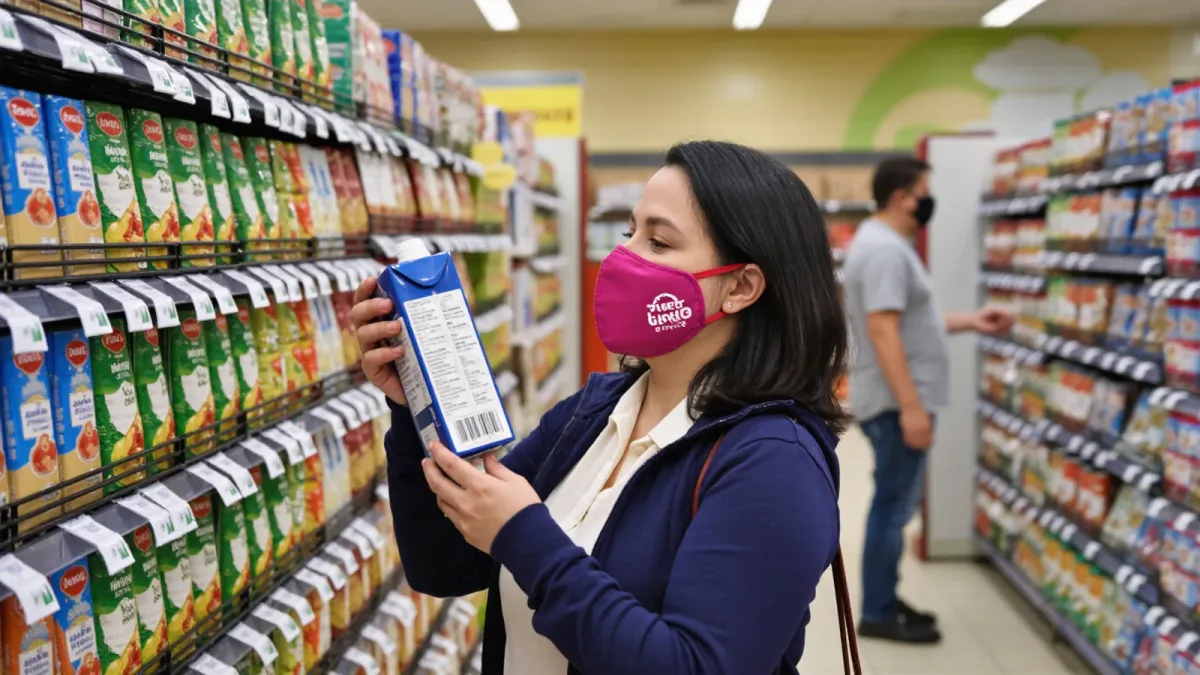
The Nutrition Facts panel lists sodium in milligrams per serving with a percent Daily Value pegged to 2,300 — a reader can see that a frozen dinner at 1,400 milligrams consumes 61 percent of the day in one tray. Two traps persist despite the label. Serving sizes understate package consumption: a soup can labeled 480 milligrams per cup is 1,200 when the can is the meal. And sodium appears under aliases — monosodium glutamate, sodium bicarbonate, disodium phosphate, brine — in ingredient lists, per FDA labeling definitions, so a product can be engineered salty-sounding-free while still loading milligrams.
What does the trial evidence say sodium reduction buys?
Blood pressure falls when sodium falls, with the largest responses in people with hypertension, Black adults, and older adults — findings established across the Dietary Approaches to Stop Hypertension sodium trials, which tested three sodium levels within controlled diets and reported graded blood-pressure reductions, per the trial's 2001 report in the New England Journal of Medicine. Whether population-level sodium reduction reduces cardiovascular events has richer but noisier evidence: observational analyses of varied quality have reported both J-shaped and linear associations, and the 2019 National Academies review reaffirmed the sodium-blood pressure link while finding the event-level evidence insufficient to pin down a single ideal number. The practical reading in the 2021 heart association statement: moderate reduction toward 2,300, and further toward 1,500 where feasible, is supported; extreme restriction lacks trial support.
Who needs less — and who needs more?
Most American adults sit above both official numbers, so the population message is reduction. The exceptions run both ways: people with salt-sensitive hypertension, heart failure, or kidney disease may be assigned targets below 1,500 by their clinicians, with medication interactions that make self-direction unwise. On the other side, heavy sweaters — outdoor workers in heat, endurance athletes — can lose a gram or more of sodium per liter of sweat per exercise-physiology measurements, and the heart association statement explicitly notes their higher needs. Salt-tablets-for-everyone advice is as wrong as no-advice-at-all; sodium requirements bracket a 10-fold range across the population, which is why the individual number belongs in a clinician's or occupational health provider's office.
When to talk to a clinician
Anyone with diagnosed hypertension, heart failure, chronic kidney disease, or a history of stroke should treat sodium targets as part of a treatment plan set with their own clinician, including reading labels against an individual number rather than the population limit. Workers in hot environments with symptoms of salt depletion — cramps, dizziness, headaches during heat exposure — belong with an occupational health provider before changing intake in either direction.