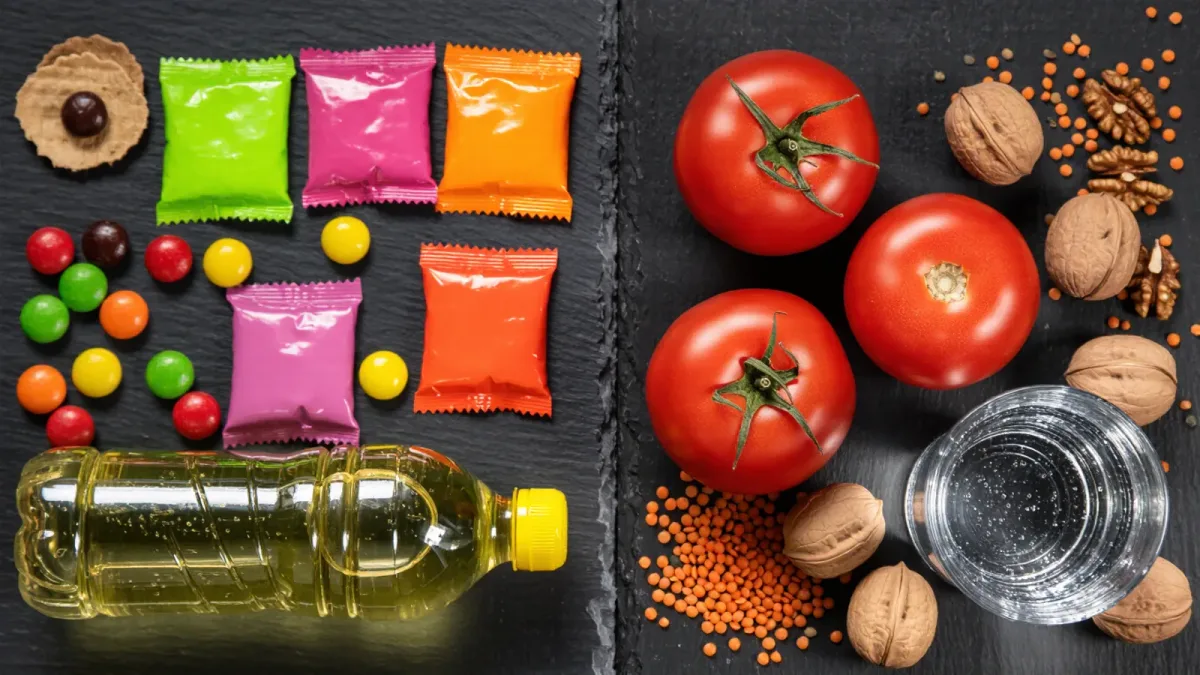

The two most-cited findings: in a 2019 inpatient trial by National Institutes of Health researcher Kevin Hall, adults eating an ultra-processed diet consumed roughly 500 more calories per day than on a matched unprocessed diet, gaining about two pounds in two weeks; and a 2024 umbrella review in The BMJ associated high ultra-processed intake with higher risks of cardiovascular disease, type 2 diabetes, and all-cause mortality. One is an experiment; the others are associations.
The findings here belong to their named studies, and much of the evidence is observational; readers with diet-related conditions should make changes with their own clinician rather than on the strength of any population study.
What counts as ultra-processed food?
The definition most studies use is NOVA, a classification developed by Carlos Monteiro and colleagues at the University of São Paulo, first laid out in 2009 and refined since. It sorts food into four groups: unprocessed or minimally processed foods; processed culinary ingredients; processed foods such as canned vegetables and cheese; and ultra-processed foods — industrial formulations built from substances extracted from foods or synthesized in laboratories, with colorings, emulsifiers, flavorings, and cosmetic additives, exemplified by soft drinks, packaged snacks, reconstituted meats, instant noodles, and most packaged breads. The category is broad enough to include items of very different nutrient profiles, which is one standing criticism of the research built on it.
What did the controlled feeding trial find?
Hall's 2019 study in Cell Metabolism admitted 20 adults to an NIH clinical unit for a month and randomized them to two-week blocks of ultra-processed versus unprocessed diets matched for calories, macronutrients, fiber, sugar, and sodium, with plates emptied ad libitum. On the ultra-processed arm, participants ate about 508 more calories a day and gained roughly 0.9 kilograms; on the unprocessed arm they lost about 0.9 kilograms. The design isolates processing itself from nutrients — a first in this literature — and its size and duration are small: 20 people, 28 days. Hall's group reported in 2021 that food energy density and eating speed accounted for much of the calorie difference in a follow-up analysis, which keeps the mechanism partly open.
What do the observational studies show?
Large cohorts associate high ultra-processed intake with worse outcomes, and the 2024 umbrella review in The BMJ — pooling dozens of meta-analyses covering millions of participants — found convincing or highly suggestive evidence for links with cardiovascular disease mortality, type 2 diabetes, anxiety and mental health outcomes, and all-cause mortality, with weaker or inconsistent evidence for many other outcomes the field has examined, including several cancers. Cohort work in the French NutriNet-Santé study and in US cohorts found each 10-percentage-point increase in ultra-processed share of diet associated with elevated risks of overall cancer and cardiovascular disease, per published analyses. Confounding shadows all of it: high UPF intake tracks with lower income, lower exercise, and higher smoking in most datasets.
Landmark studies in brief
- Monteiro and colleagues, 2009: NOVA classification introduced at the University of São Paulo, making processing level itself a research variable.
- Hall et al., Cell Metabolism, 2019: 20-adult inpatient crossover trial, roughly 500 extra calories and two pounds gained in two weeks on the ultra-processed diet.
- NutriNet-Santé cohorts, 2018 onward: 10-percent increases in UPF share associated with higher cancer and cardiovascular risk in tens of thousands of French adults.
- Lane et al., The BMJ, 2024: umbrella review finding convincing or highly suggestive associations with cardiometabolic, mental-health, and mortality outcomes.
The one experiment in the file shows an eating-rate and calorie effect; everything else shows correlation with a confounding problem no study has fully solved.
Why the evidence is harder than it looks
Three problems recur in the literature's own critiques. First, classification: NOVA sorts by degree of industrial processing, and reviewers including researchers at agricultural research institutions argue the category lumps whole-grain packaged breads with candy, muddying any dose-response interpretation. Second, confounding: ultra-processed intake is a marker for socioeconomic position in most cohorts, and the adjustments never fully remove it. Third, mechanism: the Hall trial suggests overeating driven by energy density and palatability rather than by additives, while the additive-focused hypothesis — emulsifiers altering gut microbiota, for example — rests mostly on preliminary animal and small human work. The 2024 umbrella review authors themselves flag the evidence quality as generally low or very low by formal grading for most outcomes.
Is the food industry's counter-reading right either?
No. Industry-funded critiques emphasizing nutrient content over processing score real points against NOVA's breadth, but they cannot dissolve the Hall trial, which matched nutrients exactly and still found an intake difference, nor the consistency of cohort findings across countries and diets. The honest position sits between the camps: processing level carries information beyond the nutrition label, the strongest finding is about calories eaten ad libitum, and causal claims about specific additives remain preliminary.
What would a practical reading of the evidence be?
The research supports attention to the outsized share ultra-processed foods hold in American diets — federal survey analyses estimate they supply well over half of US adults' calories — without supporting a rule that any touch of processing is harmful. Studies generally find risk rising across the top of the intake distribution, and diets built on minimally processed foods perform well in trials regardless of the classification system. Anyone redesigning their diet around these findings — particularly someone managing diabetes, cardiovascular disease, or kidney disease — is making clinical changes that belong with their own clinician or a registered dietitian, not with a study's population averages.