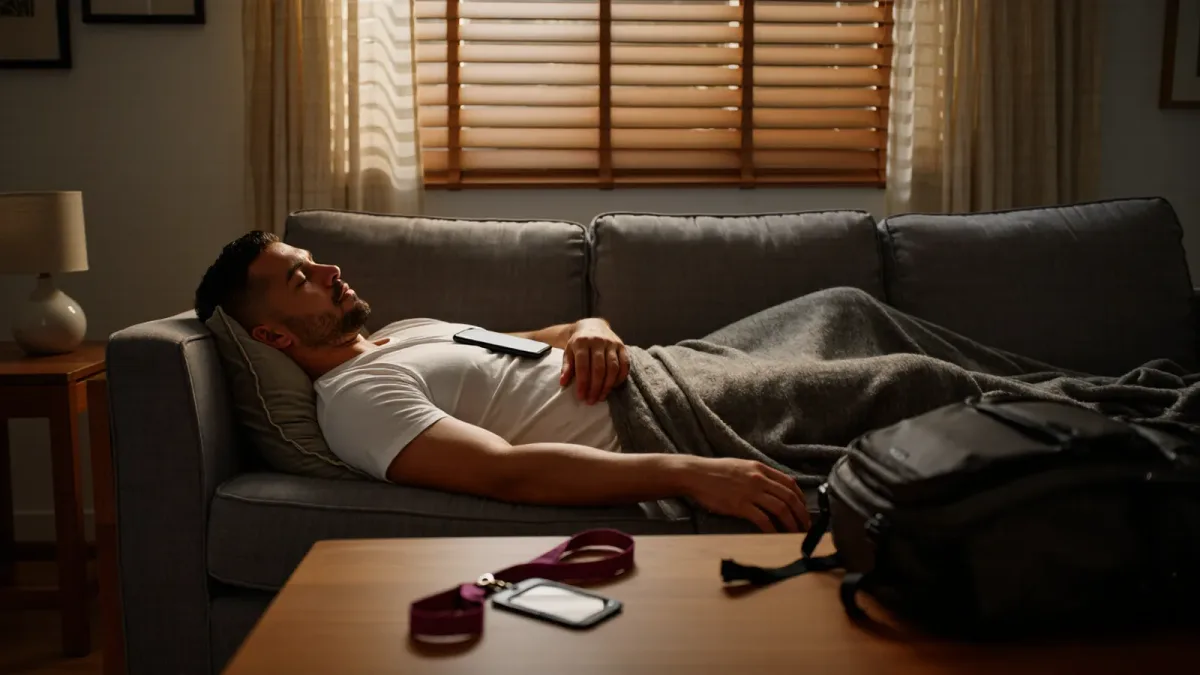
WellbeingControlled studies support two nap windows for night workers — a prophylactic nap before the shift and a short in-shift nap around 20 to 30 minutes — with longer in-shift naps improving outcomes but risking sleep inertia on waking.
Nikki RobertsApril 16, 2026
WellbeingSleeping hours apart on weekends versus weekdays shifts the body clock the way travel does — a mismatch Till Roenneberg named social jetlag in 2006 and later linked to higher obesity risk.
Nikki RobertsMarch 16, 2026
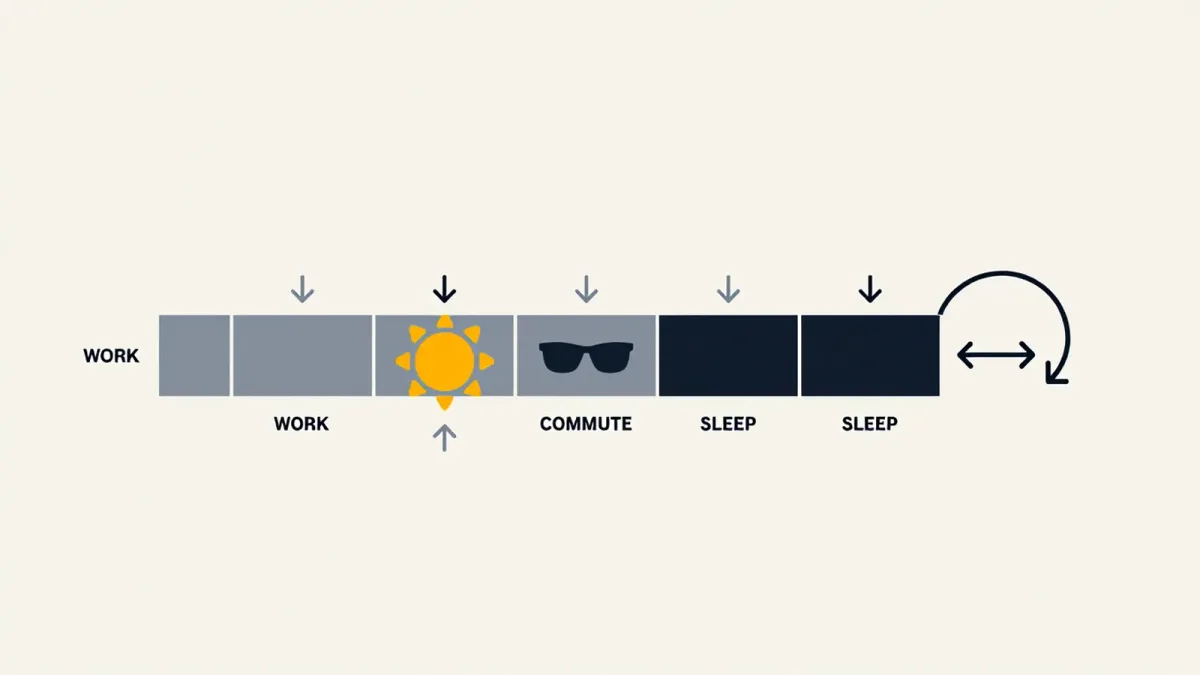
WellbeingBright light at night can push alertness up and the body clock toward a night schedule, while morning light on the commute home does the opposite — NIOSH training materials treat light as the shift worker's strongest lever.
Nikki RobertsFebruary 28, 2026
WellbeingThe ICD-11 defines burnout as an occupational phenomenon tied to workplace stress — exhaustion, cynicism, reduced efficacy — while depression permeates all life domains, and published studies show the two overlap enough that instruments misclassify a substantial share.
Nikki RobertsFebruary 8, 2026
WellbeingA 2022 meta-analysis in PLOS One found microbreaks reliably cut fatigue and slightly lift vigor, with effects depending heavily on what kind of work the break interrupts.
Nikki RobertsFebruary 5, 2026
WellbeingCognitive behavioral therapy for insomnia, strategic light control, and anchor scheduling carry the strongest evidence for shift workers; most sleep-supplement claims do not.
Nikki RobertsJanuary 15, 2026