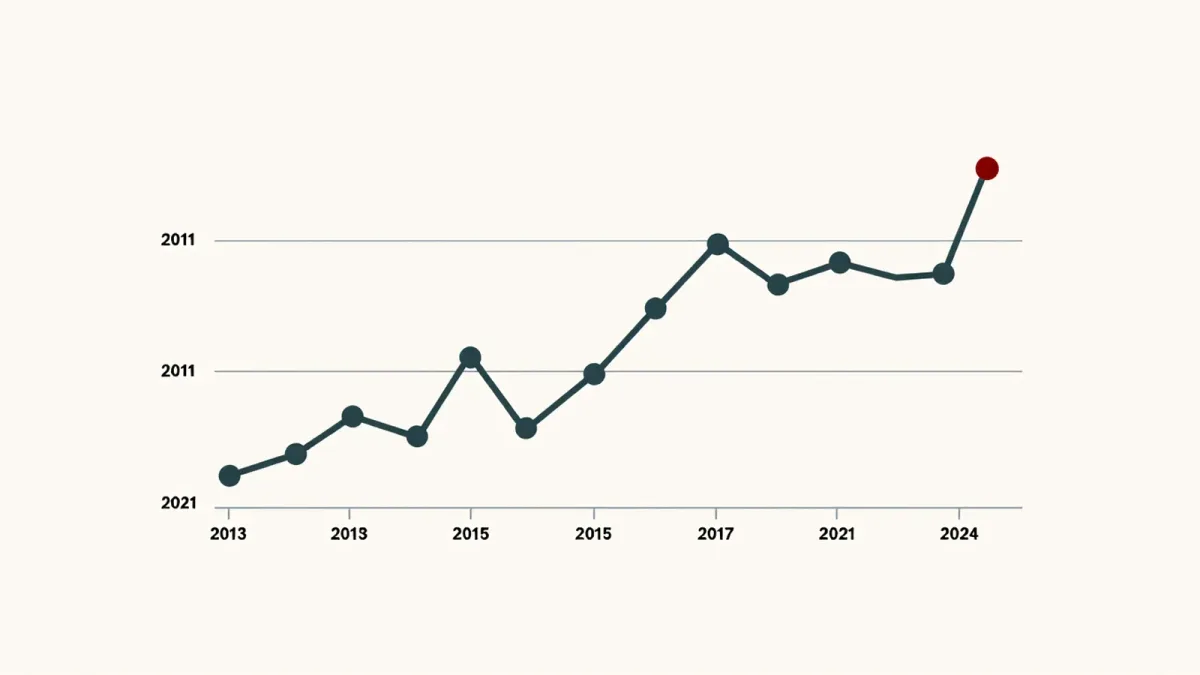
More than 60 percent of US physicians reported at least one manifestation of burnout in the 2021 wave of the longitudinal study published in Mayo Clinic Proceedings by researchers affiliated with the American Medical Association and Mayo Clinic — up from 43.9 percent in the 2017 wave of the same series — and parallel surveys of nurses point in the same direction, with the National Council of State Boards of Nursing's 2023 workforce survey finding about 800,000 registered nurses intending to leave employment by 2027.
Health Work NY publishes information, not medical or career advice. This article summarizes what named burnout studies and institutions have actually measured in health care workforces — prevalence, causes, and interventions with evidence behind them — and flags where the research is thin. Burnout claims below cite named studies with journals and years; where evidence is preliminary or drawn from small samples, that is stated.
What is burnout, and who defines it?
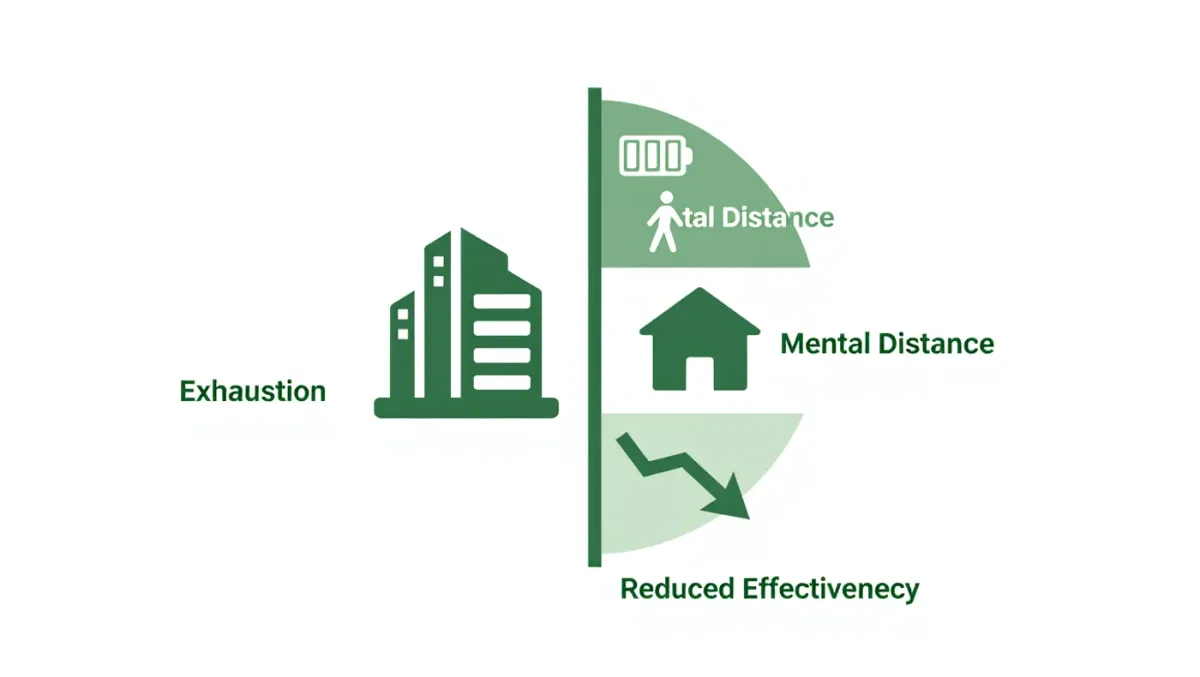
The most widely used definition comes from the World Health Organization's International Classification of Diseases, ICD-11, which in 2019 classified burnout as an occupational phenomenon — exhaustion, mental distance or cynicism toward the job, and reduced professional efficacy — explicitly not a medical condition, per the WHO's published description. Most survey research in health care uses the Maslach Burnout Inventory or single-item derivatives of it, per the methodology sections of the studies cited below. That definitional point matters for reading the numbers: prevalence figures measure responses on a specific instrument in a specific year, not a diagnosis.
What are the measured prevalence trends?
The physician series is the longest running. The Mayo Clinic Proceedings studies led by Shanafelt and colleagues tracked national physician samples across a decade and a half: roughly 45 percent reported burnout symptoms in the 2011 wave, about 54 percent in 2014, 43.9 percent in 2017, and more than 60 percent in the 2021 wave, per the successive publications in that journal. The pandemic-era spike receded in later waves but not to the 2017 floor, per the study team's 2022 and 2024 updates. For nurses, the National Council of State Boards of Nursing's 2023 National Nursing Workforce Survey found that about 800,000 registered nurses said they intended to leave employment by 2027, with stress and burnout cited among the leading reasons, per the council's published report — a workforce-intent figure from the licensing-body research arm, not a measure of diagnoses.
What causes it, according to the research?
The National Academies of Sciences, Engineering, and Medicine's 2019 consensus report, Taking Action Against Clinician Burnout, concluded that burnout is driven primarily by systemic factors — electronic health record burden, clerical load, staffing and schedule pressures, and a culture that treats help-seeking as weakness — rather than by individual frailty, per the report's findings. That systems framing is the research consensus the report formalized, and it is why intervention studies increasingly target workload and documentation rather than resilience training alone. Occupational research funded by the National Institute for Occupational Safety and Health reaches a consistent conclusion for shift-based workers: schedule instability and understaffing compound each other in the exhaustion component of burnout measures.
Which interventions have evidence behind them?
Two categories dominate the peer-reviewed literature. Organization-directed changes — documentation-team support to cut EHR hours, schedule redesign, team-based workflows — produced the larger and more durable reductions in pooled analyses of intervention studies, per meta-analyses published in JAMA Internal Medicine and the Journal of General Internal Medicine in the late 2010s. Individual-directed programs — mindfulness training, small-group debriefings, counseling — show measurable short-term benefit in randomized trials but smaller effects that fade without organizational change, per the same reviews. The National Academies report's central recommendation followed from this evidence: treat burnout as a property of the work system, and evaluate interventions at that level. Evidence for specific interventions in nursing homes and home care remains thin — most trials run in hospital physician groups — a gap the research community itself has flagged.
What happened after the pandemic?
Federal attention moved from measurement to funding. The Dr. Lorna Breen Health Care Provider Protection Act, passed with bipartisan sponsorship and signed in 2022, directed grants toward health worker mental health and suicide prevention and funded the establishment of an online evidence base for burnout interventions, per the act's statutory text and subsequent grant announcements through 2024. Survey teams in the AMA-Mayo series and elsewhere reported modest improvement in the most recent national waves, per their published updates, while workforce-intent data — the NCSBN's 800,000 figure — continue to show a gap between how workers say they feel and what they plan to do about it.
Frequently asked questions
Is burnout a medical diagnosis?
No. The WHO's ICD-11 classifies burnout as an occupational phenomenon resulting from chronic workplace stress that was not successfully managed, per its 2019 description — explicitly not a medical condition. Screening and treatment target the component experiences, such as exhaustion or depression, which are clinical conditions; the two are related but distinct in the research literature.
How many nurses plan to leave the workforce?
About 800,000 registered nurses said they intended to leave employment by 2027, per the National Council of State Boards of Nursing's 2023 National Nursing Workforce Survey, with roughly 190,000 licensed practical nurses saying the same. Intent to leave is a survey response, not a departure count, and prior waves of intent data overpredicted actual attrition, per the council's own comparisons.
Does resilience training fix burnout?
Not by itself, per the pooled intervention evidence: meta-analyses in JAMA Internal Medicine and the Journal of General Internal Medicine found individual-directed programs produce modest short-term gains, while organization-directed changes to workload, documentation burden, and scheduling produced larger and more durable reductions. The National Academies' 2019 report recommends treating burnout as a systems problem first.
Where can workers find help now?
Peer support programs, state physician and nurse support lines, and employee assistance programs exist in most large New York systems, per program descriptions from the Dr. Lorna Breen Foundation's grantee network, though availability varies by employer. For symptoms that look like depression or another clinical condition, the appropriate first step is a clinician — this publication reports the research and provides no clinical guidance.