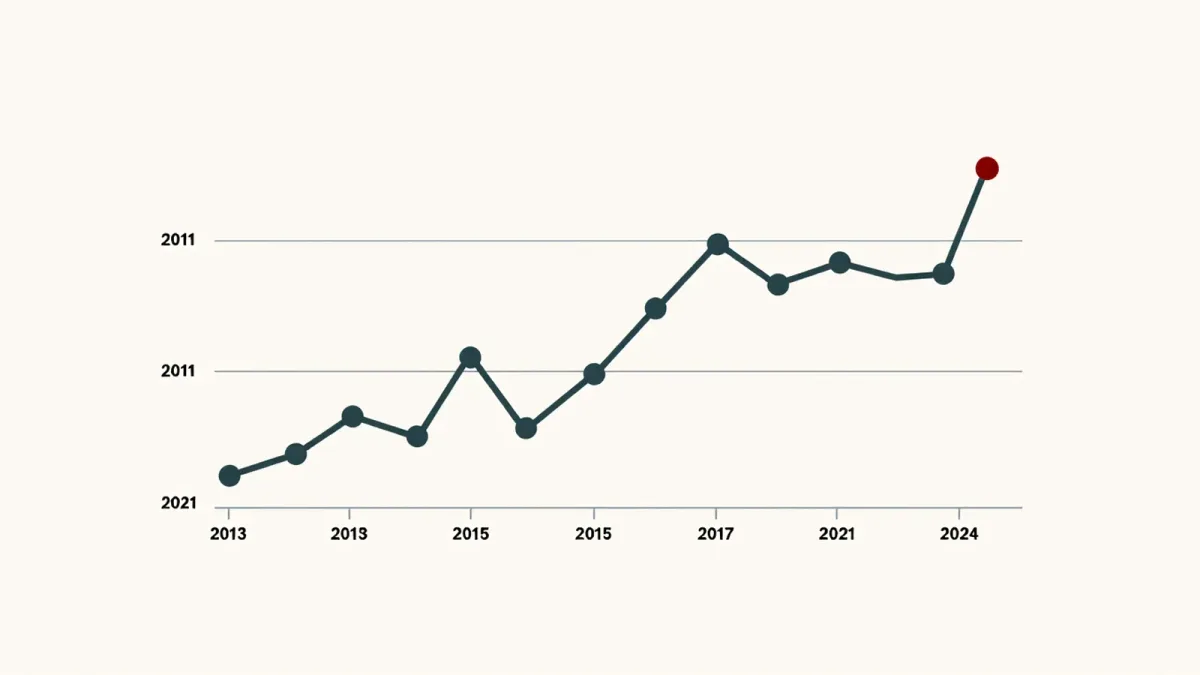
Federal injury data show health care and social assistance recording 3.6 recordable injuries and illnesses per 100 full-time workers in 2023, half again the private-industry average of 2.4.
Per-diem pools fill hospital scheduling gaps shift by shift, paying premium hourly rates without benefits; they expanded as travel-nurse rates fell 11.3 percent during 2023, per platform-published pay trends, and became the flexible tier hospitals build rosters around.
State law has required hospitals to build staffing plans with frontline nurses since 2023. A 2024 survey found ratios go unmet in intensive care more often than not.
Peer support is the most widely adopted response to clinician distress since 2020 — federal grants under the 2022 Lorna Breen Act funded dozens — but published evaluations are mostly single-site series showing short-term benefit, not controlled proof.
About 20 percent of New York's wage and salary workers belong to unions, the highest or second-highest rate in the nation in recent BLS counts, and health care is one of the industries where that density is most visible.
Longitudinal studies published in Mayo Clinic Proceedings found more than 60 percent of US physicians reporting burnout symptoms in the 2021 wave, up from a 2017 low near 44 percent, and nurse surveys point the same direction.