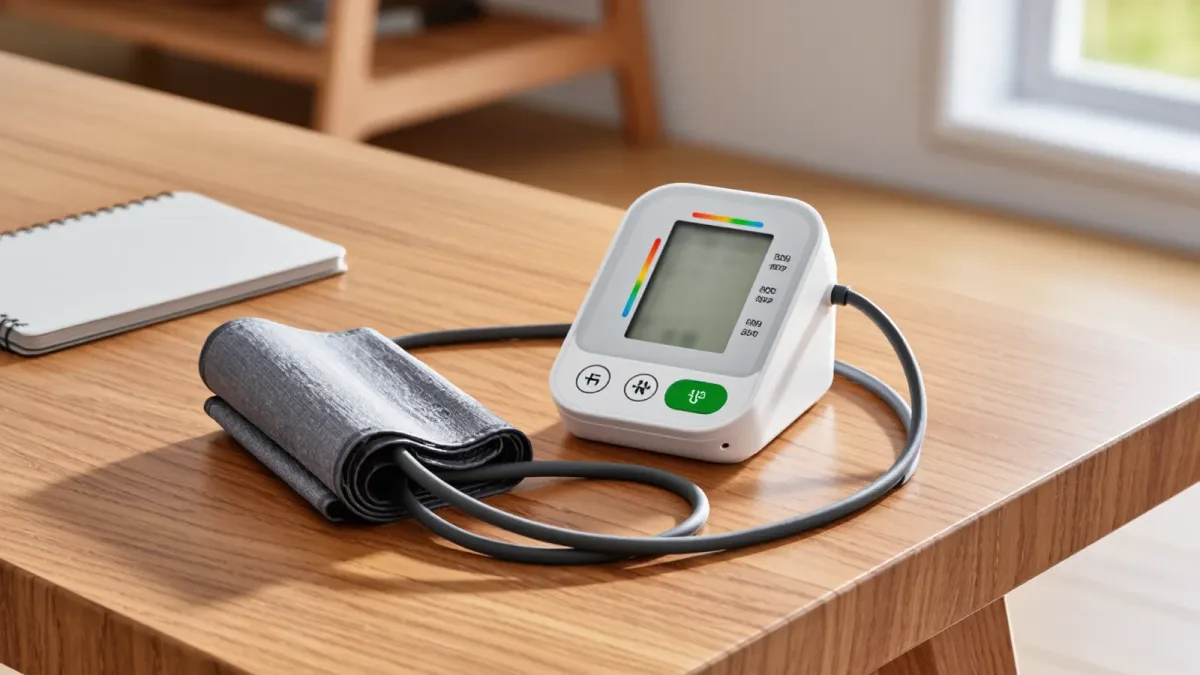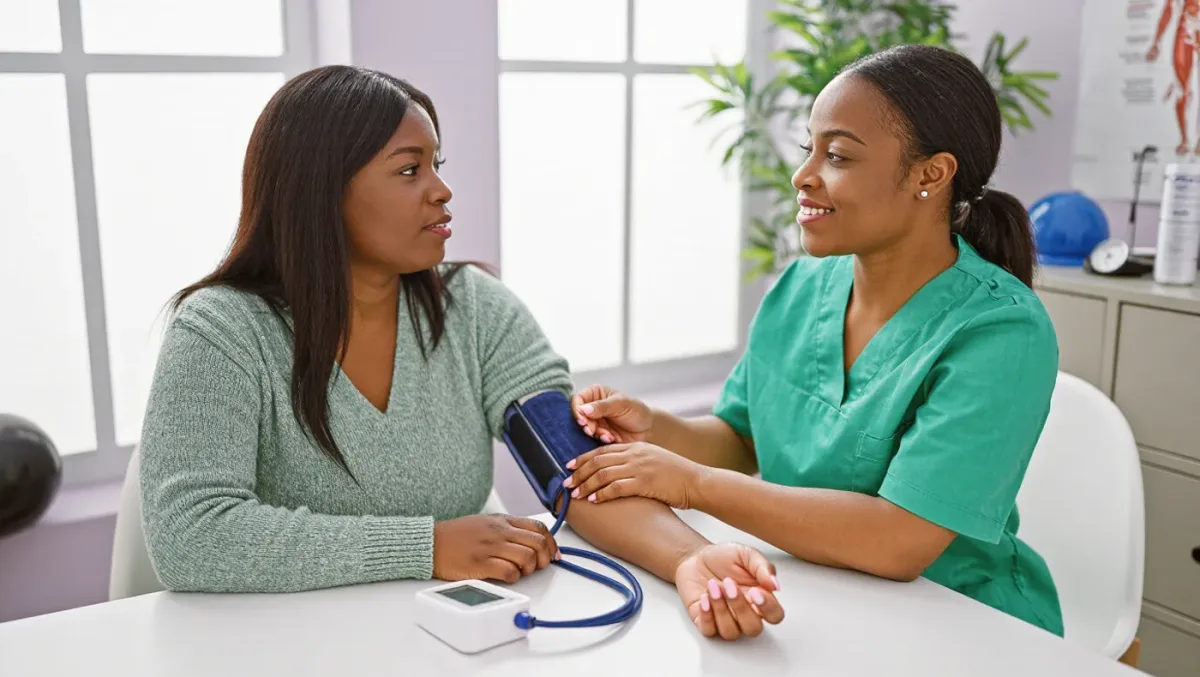
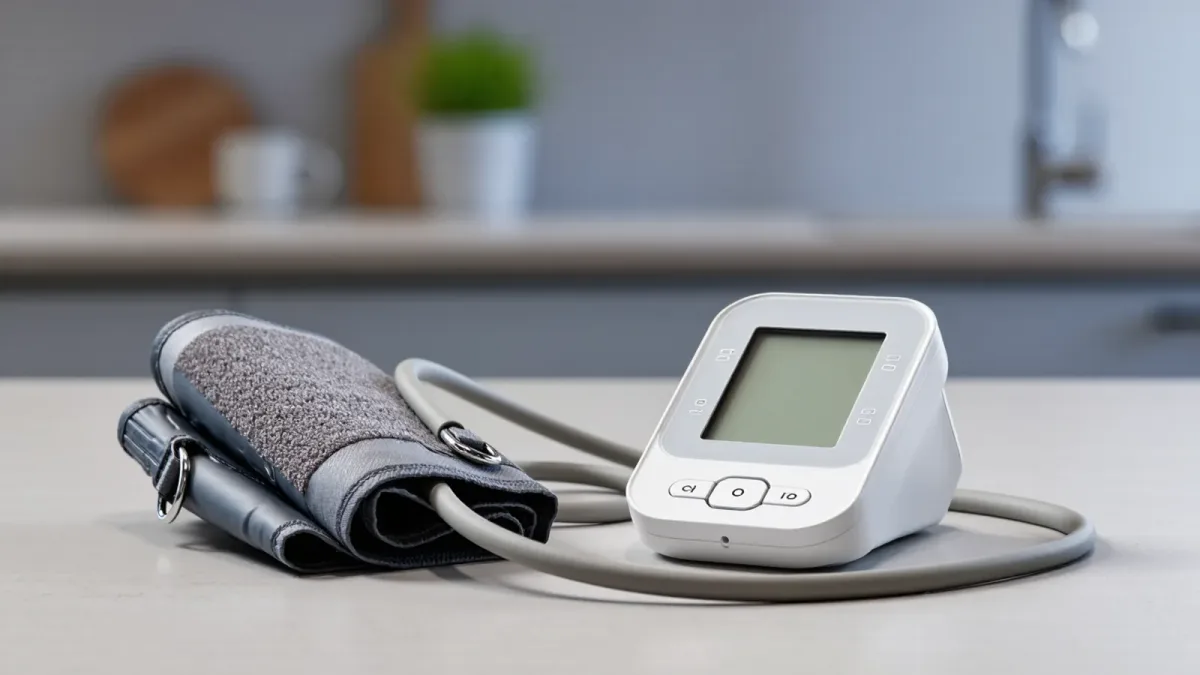
A validated upper-arm home blood pressure monitor, used correctly, reads within a few millimeters of mercury of what a clinical device shows: accepted devices must pass the ANSI/AAMI/ISO 81060-2 validation protocol, and the American Medical Association's Validated Device Listing, launched in 2019, catalogs models that have done so. Wrist and finger monitors, and any cuffless smartwatch estimate, are not validated for diagnosis and are not recommended by guideline groups.
This site publishes information, not medical advice. The standards and recommendations described here belong to the named organizations, and accuracy in a study does not guarantee accuracy for any individual reading — cuff size, posture and technique move readings by amounts larger than most device error. Anyone treating hypertension should interpret home readings with their own clinician and calibrate treatment decisions against in-office measurements.
What does validation actually mean?
The ANSI/AAMI/ISO 81060-2 protocol, the standard most manufacturers cite, requires a device to be tested against a mercury reference in a defined human population and to meet error limits — a mean difference within 5 mm Hg and a standard deviation within 8 mm Hg of the reference method across the tested sample. Passing is device-specific, not brand-specific: one validated model does not validate a whole manufacturer's catalog. The AMA's Validated Device Listing, built on the organization's VALIDATE BP program, publishes the models whose manufacturers submitted validation documentation, and it is the fastest way for a consumer to check a specific monitor before buying.
Device types, in guideline terms
| Type | Guideline status | Reason |
|---|---|---|
| Upper-arm cuff, validated | Recommended for home use | Passes 81060-2 validation against mercury reference |
| Wrist monitors | Not recommended for diagnosis | Readings shift with wrist position relative to heart height |
| Finger monitors | Not recommended | Validation data lacking; systematic error documented |
| Cuffless wearables | Not validated for clinical use | Estimate from pulse-wave signals, no 81060-2 passing |
How accurate is accurate enough, and where does the bigger error come from?
A validated monitor in controlled testing typically deviates from the reference by a few millimeters of mercury, but the technique error around a home reading is usually larger than the device error. Studies cited in hypertension guidelines show that cuff size mismatch, a full bladder, talking, back support and leg position, and measuring within 30 minutes of caffeine, exercise or smoking can each shift systolic readings by 5 to 15 mm Hg. That is why the American Heart Association's home-measurement instructions read like a ritual: five minutes of quiet rest, back supported, feet flat, arm at heart height on a table, cuff on bare skin, no talking, and two or three readings a minute apart, averaged.
What do home readings do for care, per the studies?
Home monitoring is an adjunct to clinical measurement, not a replacement for it. A 2017 meta-analysis by Tucker and colleagues in Hypertension found that home blood pressure monitoring combined with support — education, pharmacist involvement, or telemonitoring — led to clinically meaningful additional reductions in systolic pressure compared with usual care. The US Preventive Services Task Force's 2021 hypertension statement recommends screening for high blood pressure in adults in a clinical setting and notes that home measurement, using validated devices and proper technique, helps confirm a diagnosis before treatment begins, particularly for white-coat and masked hypertension where office readings mislead.
How should someone pick and check a monitor?
The sequence supported by the named programs is short. Check the AMA Validated Device Listing for the exact model, not just the brand. Confirm the cuff fits the arm — the sizing range printed on the cuff matters more than any feature. Prefer automatic upper-arm oscillometric devices over manual models unless a clinician has instructed otherwise. Re-check fit after weight change or if readings drift from clinician measurements, and bring the home device to an appointment once a year or so to compare it against the office monitor, a practice several guideline groups recommend.
What about cuff fit for larger or smaller arms?
Cuff-size error is the most common systematic error in home measurement. A cuff too small for the arm overestimates pressure; a cuff too large underestimates it. Guideline groups, including the American Heart Association, instruct users to match the cuff's bladder to the printed arm-circumference range and to use a wide-range or conical cuff when arm circumference exceeds standard sizes. Monitors with a single standard-size cuff bundled in the box are a frequent source of high readings that have nothing to do with the person's health.
When to talk to a clinician
Home readings warrant prompt clinical contact when systolic values run at or above 180 mm Hg or diastolic at or above 120 mm Hg, which guideline groups class as a hypertensive crisis — and immediate emergency care when those readings come with chest pain, shortness of breath, vision changes, weakness, or trouble speaking. Sustained readings above the target range a clinician has set, repeated discrepancies between home and office values, or readings that drop sharply with lightheadedness all belong in a clinician conversation rather than in self-adjusted medication.
The device matters less than the ritual: a validated upper-arm cuff, the right size, worn on bare skin, after five quiet minutes, two or three readings averaged — that sequence does more for accuracy than any feature list.